Whaloseal -- True Seals -- Oceans: 50 feet long gray
filter-feeding aquatic seal with more flipper-like front legs.
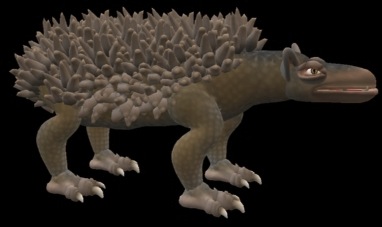
Hedgeatherium
-- Hedgehogs -- European Forest: 5 feet long gray
tiger-like long-snouted carnivorous hedgehog with short quills over the
body.
Otterseal -- Otters -- North/South American
Coasts: Sea lion shaped brown otter. Takes seal niches.
Rabbideer
-- Rabbit -- North American Plains: 5-15 feet tall,
golden with white spots long-necked deer-like rabbits. Replaced deer in
North America.
Arctic Rabbideer -- Rabbit -- North American Taiga: 7 feet tall gray wooly deer-like rabbit with a
long body. Replaced deer in North America.
Hogatherium -- Hog --
European Forest: 7 foot tall herbivorous brown hog with 4
tusks.
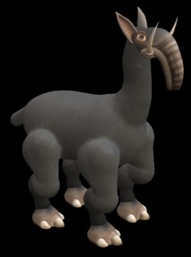
Rhinohog -- Warthog -- west African Savannah: 10 feet
long (body) gray hairless herbivorous warthog with a 5 feet long neck
and a 3 feet long proboscis.
Crocotter -- Otters -- Crocolutrinae
-- North America and Northern Eurasia: 5-15 feet long black
semi-aquatic otter with a long snout, tail, and webbed feet. Fills a
crocodile-like niche. Lives where there aren’t crocodilians.
Antshrew
-- Elephant Shrew -- African Savannah: 2 foot tall brown bipedal
elephant shrew with claws on the hands and a longer proboscis, uses the
claws to dig out ant and termite nests. I have adapted it from a similar
fantasy rodent I had made before.
Beaver Vole -- European Water
Vole -- western European Forest coasts: 3-4 feet long dark brown
beaver-like Water Vole. Feeds on fish and leaves, and spends most of
it’s time in the water, but lives on land in a burrow.
Seabat --
Bats -- European Forest coasts: 2-fingered 8-foot wingspan white
sea-going piscivorous long-snouted bat. Replaces some seabirds.
Antarctic
Bat -- Bats -- Antarctic Savannah Tundra: 6-foot wingspan brown
carnivorous bat. It eats eggs and small rodents.
Baboontherium --
Hamadryas Baboon -- African Savannah: 4-feet long golden (males gray)
carnivorous Baboon. They have grown claws, sharp teeth, lost the Ischial
Callosities (big red butt) and opposable thumbs on the feet, with the
hind feet become like long paws. The males also have a big mane. Lives
in the ground instead on the trees. Just like lions, the male leads the
pride and the females do the hunting.
Carniquoll -- Tiger Quoll
-- Australian Rain Forest: 3-5 feet long brown with white spots
tiger-like quoll.
Predator Rat -- Brown Rat -- European Plains: 5
foot long gray carnivorous rat. The 4 incisors have sharpened, stopped
continuously growing, and have seperated to become farther apart, but
there are no teeth in the gap.
European Baboontherium --
Hamadryas Baboon -- European Forest: 4 feet long brown carnivorous
Baboon. They have grown claws, sharp teeth, elongated canines, and a
decreased Ischial Callosities (big red butt). The males also have a big
mane. Like lions, the male leads the pride and the female do the
hunting. Is related to the Baboontherium, but unlike them still lives in
the trees (but hunts on the ground), has elongated canines, and still
has opposable thumbs on the feet. Came to Europe by island hopping the
recently closed Mediterranean sea.
Antarctijou -- Kinkajou --
Antarctic Savannah Tundra: 4 feet long (with a 1 foot tail) Antarctic
dwelling terrestrial grass eating Kinkajou. It still has it’s
weasel-like shape. Came to Antarctica by island hopping.
Weaserax
-- Tree Hyrax -- African Rain Forest: 3 feet long gray tree hyrax with
opposable thumbs on the paws. Eats leaves and is arboreal.
Pigodillo
-- Armadillo -- South American Grasslands: 4 feet tall 10 feet long
armadillos with a circular body and a club at the end of the tail. They
can eat anything, and are the pigs of South America.
Parasite Bat
-- Vampire Bat -- South American Rainforest: A 1-inch long brown
vampire bat . It lives in the trees, and it jumps on it’s prey back,
rips a hole in it by way of the claw-finger in the elbow, sucks as much
blood as it can, and then flies off.
Sloth/Monkey Bats -- Flying
Foxes -- southern Australian Rainforest: Primate-like
arboreal bat species. The 5 fingers have lost the webbing (except for
the sloth species, there is a membrane between the 5th finger and legs).
It is 6 inches to 5 feet long, brown, and feeds on fruit. The smaller
more active ones lost the gliding membrane, the larger more lazier ones
still have it. The tail was also freed of the membrane and became like a
prehensile primate tail, and grew more fur. They live in Southern
Australia, because the Tree Kangaroo outcompetes them in the north.
There are around 150 species, with small-medium insectivores,
small-large fruigivores, and medium-large sloth-fruigivore-herbivores.
Weasenrec
-- Tenrec -- Madagascar: 5-foot long brown arboreal tenrec. It is the
apex predator of Madagascar, and is shaped like a weasel, except with
slightly longer legs, an opposable thumb, a prehensile tail, sharp
teeth, elongated canines. Native to Madagascar.
